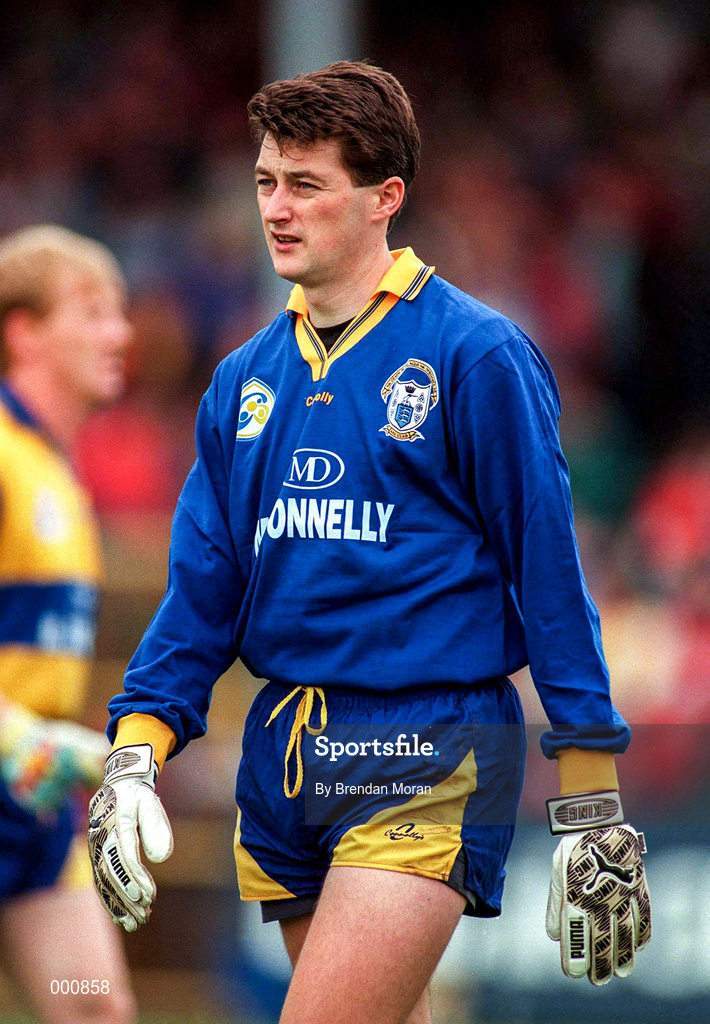
James Hanrahan – Parish and Clare Number One
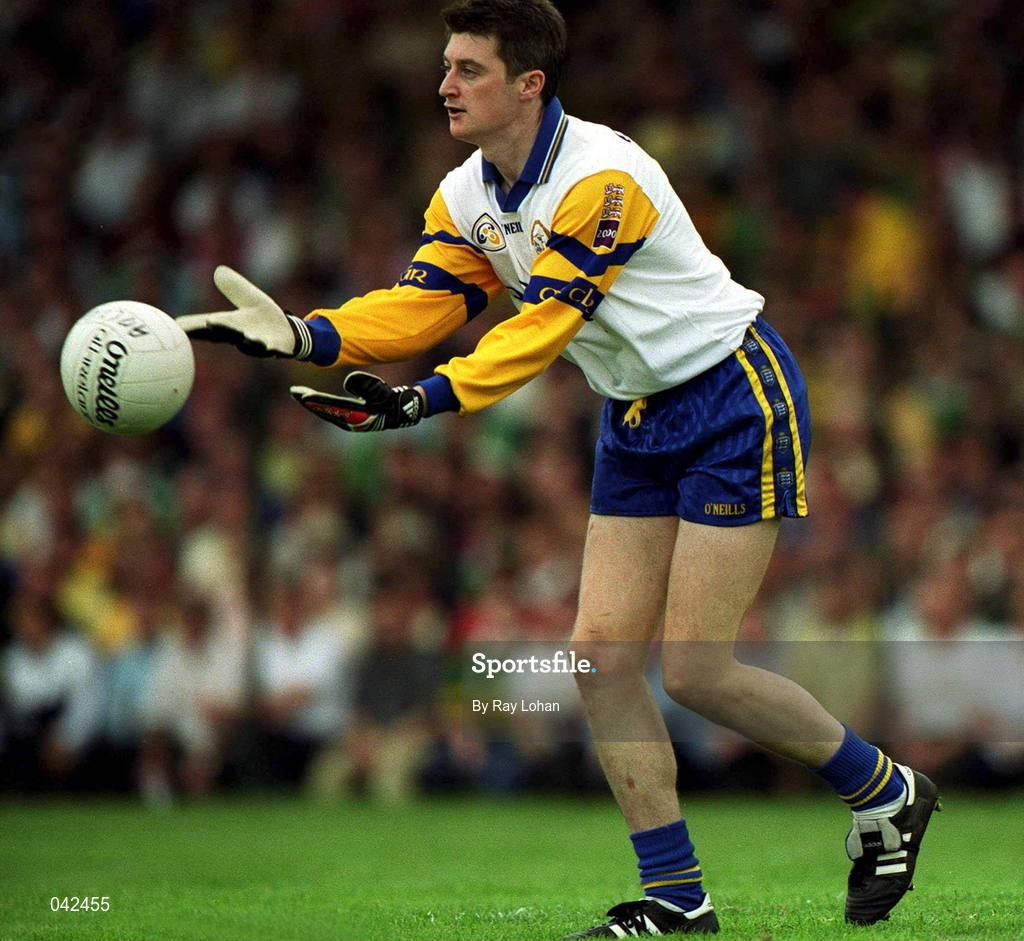
St Joseph’s is firmly a dual club nowadays but it might come as a surprise to those in juvenile ranks that before Clare and Saint Joseph’s hurling re-emergence 30 odd years ago, football took the lead in inspiring dreams, and one of our great dual players, James Hanrahan, was at the centre of it.
A good quiz question: What year did the club win their first county title and what code?
The answer: 1898 when a Doora selection beat Ennis Faughs to win the title. We would have to wait 56 years before winning another county senior championship in the other code so for a long time that was the only top tier title to our name.
Craobh Rua – Parish football revival
In the mid-70s, the club had started to grow in tandem with the development of more housing around the parish, particularly in the Roslevan area. The need was seen to cater for this participation by the revival of football, leading to the establishment of Craobh Rua in November 1975. A core group, which included Stephen Hassett, Pat Frawley, and Michael Williams were involved and the team wore white and red jerseys.
“That’s where it started”, James says. “From there eventually Craobh Rua was absorbed to be the football wing of Doora-Barefield, then just Doora Barefield football. Noel Stapleton and my uncle Peadar O’Brien and Joe Queally were involved in that.”
Back in those days there was stricter demarcation of football and hurling territories, west of Ennis football, east of Ennis hurling, but Doora-Barefield were pioneers in terms of breaking the mould. With football starting to thrive in the Parish, and titles won underage, eventually Clare selectors started to take notice.
Under 14 and under 16 football titles were won at B grade in 82 and 84 and this talent filtered through for the club to win it’s first adult football title in 90 years when claiming the Junior B football title in 1988. The following year O’Curry’s were the opposition as the Parish won the 1989 Junior A final in Kilmihil. It had been a rapid rise.
“Myself and Martin Baker played in an under 21 Munster final against Cork. Kieran (O’Neill) was also breaking through- he had a big football background in Kilmihil and Doonbeg and was well known in west Clare. After that Munster final I was drafted into the senior panel. I made my debut coming on as a sub for Martin Flynn in goal when we played Tipperary”.
The arrival of Maughan
Clare football had been going through one of its cyclical fallow periods when James and Kieran began to make their mark on the county team. Then a little-known Mayo man called John Maughan was appointed Clare senior football manager, and suddenly the culture changed. Maughan was just 28 years old when he took the Clare management job in 1990. Just 11 players turned up for his first training session in Crusheen. Try explaining that to youngsters today, when a Clare jersey of any description is so prized and aspired to.
Thanks to Maughan’s preparatory zeal, improvement would be quick from that low base.
“It was super training, lots of physical work, lots of running. Everyone got fit fast. We had good footballers at the time, big men but skilful – once those lads got physically fit, everything improved all round.”
Maughan the soldier also knew that an army, as Napoleon said, marches on its stomach and made sure the squad was well looked after in that sense, with post-match meals in Cusack Park or the Queens Hotel.
“There were sandwiches and tea after training provided by Arthur Flanagan the groundsman at the time. You learned to get out of the shower fast enough or there’d be nothing left.”
Maughan brought a level of preparation not previously experienced, with Lahinch beach and golf club and Ballyline used to build physical and mental resilience. The hurlers would soon take a leaf from that playbook.
With the benefit of hindsight, the evidence of a potential surge in Clare’s football fortunes was present. They had contested two under 21 Munster finals in 87 and 88, narrowly losing the first. Then in November 1991, James and Kieran were part of the Clare side that beat Longford to win the All-Ireland B title in Ballinasloe. This competition was the precursor to the modern day Tailteann Cup and was a huge morale booster for the big ball, and Clare GAA in general at that time. It was a first senior football crown in 74 years, and not to be sniffed at.
Momentum and belief grew.
1992 History Makers
“We had a good league campaign – I remember we played Meath in the League semi-final in the Spring and we lost by just two points, 8 to 6. Meath were one of the top teams in the country at the time, so it was then we realised for sure that we had a good team.”
Meath’s famed full forward line of Flynn, Stafford and O’Rourke were held to two points, despite Clare playing with 14 men after Frankie Griffin was red carded 10 minutes in. Amazingly Clare lost another player to a red card before the interval alongside a Meath player and the resilience shown in this game was to be a sign of things to come.
“That said we made hard work of beating Tipp in that year’s Munster semi-final, but it did no harm going in as underdogs for the final.”
It took a penalty save in the dying minutes from Hanrahan to ensure victory as Clare won by 4 to secure a first Munster senior football final appearance since 1949.
They hadn’t won the prize since 1917, and Clare had not won a Munster senior championship in either code since 1932. From a supporters’ perspective there was huge novelty, and even a growing feeling that the Kingdom would not have it all its own way. The supporters travelled with some hope to Limerick that day, but James says, the team travelled with expectation.
“We knew the morning of the game that we were going to win – you get a feeling around the camp that something is going to happen- so we were fit and motivated and had good footballers all over the field. Everything came together on the day.”
With the game slipping away from them, Kerry made a last burst at the Clare goal, but the Clare custodian denied Pa Laide with a brave save and the title was won.
All Ireland Semi Final v Dublin
Three years before Baker, O’Connor and McMahon walked out on the hallowed ground of Croke Park with the hurlers, O’Neill and Hanrahan experienced the madness of 80,000 people at headquarters. It was marketed as the Battle of the Biddy’s – Biddy Early v Biddy Mulligan! The Dubs won the day, Clare weren’t far off, and a goal was disallowed, that still looks a poor decision, when rewatching on YouTube 34 years later.
That campaign shook up the GAA world, but there was more to life than 92.
“In 96 we drew with cork in Ennis and were beaten in the replay after extra time in Cork. We should have won being 4 points up in extra time. That was an exceptional game – and a controversial goal won it for them in the end.”
“The following year 97 we beat cork in Cusack Park in the semi with a last second Martin Daly goal but lost the Munster Final to Kerry by five points. There was no back door that time and they went on to win the All-Ireland.”
The Faughs Experiment
Away from the intercounty scene, James experienced great success with Faughs, an amalgamation of St. Joseph’s and Eire Og that helped accelerate a football revival in both parishes in the early to mid-90s. By then winning football titles had become a habit down the years with Doora-Barefield, but it was a super achievement for the lads involved from our club to win the Jack Daly Cup in 1994, having come up short the previous year. Almost 100 years since Doora won the championship.
“In 1993 we were beaten in the semi by Doonbeg, won it in 94 beating Kilrush in the final. In 1995 we lost the final to Doonbeg again and Eire og won the intermediate the same year so the Faughs came to an end. So we had three great years, with great support from both parishes. The Faughs were an old team that had revived and there was a great buzz around it. 35-40 players training every night and the social scene was fantastic in a way you mightn’t get these days. Tony Honan, one of the managers had a pub in Corofin and the craic was good there as well as the pubs around the town.”
What James doesn’t mention is his contribution as an outfield player during Faughs successes – for example in the 94 draw and replay- he scored 7 and 4 points respectively.
Taking Care of the Dual Player
Although he made his name nationally as a goalkeeper, James was a genuine dual player all the way up along and managed to sustain that status for many years as the Parish strived to make a breakthrough in both codes.
In 1993 he capped a fantastic 12 months by being part of the team that won the intermediate hurling championship. Incredibly that team kept that run up to go all the way to the senior county final on their first attempt in 1994, before eventually going under to Clarecastle.
He puts a lot of his success in keeping both going down to the quality of training he was exposed to at intercounty football level.
“Training for the football was of a very high standard and when you played in goal you trained as hard as the outfield players. There was no specialised goalkeeper training that time. You did all the runs and drills and great so for the club you were taking that fitness in with you.”
St Joseph’s hasn’t always been a dual club, but it has evolved into a thriving club for both codes. Slaughtneil, Loughmore-Castleiney, Cratloe and Eire Og (who James also starred for and contributed both as player and manager) are just some of the clubs who have managed their dual resources to some success. When asked what the big challenge is in making it all work, James is clear.
“With managing dual players, communication is essential, it’s massive really. Every player wants to play for their club whether hurling or football and its up to the managers to get along and sort it out so that players are not overburdened with excessive training schedules. It can be done.”